Wilton Expiration Date Code
Frequently Asked Questions
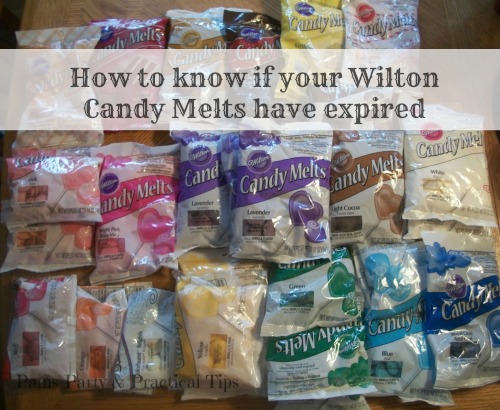
- The 1st digit '5' is the production number. The 2nd digit '3' is the year produced - in this case '2003'. The last three digits '304' tell you the Julian Calendar date (in other words the year's.
- Aug 04, 2014 December 335-365. The numbers for March are days 60-90, with 60 being March 1st and 90, March 31st. Day 071 turns out to be March 12. This bag of candy was made on March 12, 2014. Unopened bags of Wilton candy melts are freshest 18 months from the date they are made, which means this bag is good until September 2015.
Are Cake Mate® products peanut, tree nut, sesame, egg or dairy free?
None of our products contain peanuts, tree nuts, sesame or dairy. This includes Cake Mate® decorating sprinkles, sugar shapes, sugar crystals, nonpareils, decorating gels, gems, food color, decorating icing in the pressurized can, easy squeeze pouch and plastic tube gels.
Candy bars will either have a comprehensible “Best By” date or a numbered code on their package. Look at the candy bar first. If you see a date, such as “August 2010” or “10 Aug” then that’s the “Best By” date, not the date when it was produced.
Our Candy Cake Decorations DO contain egg, but they are not made in our Ocala Facility with the above listed items.
As always, we encourage consumers to diligently continue to read labels for any changes. We follow all current government regulations for labeling our products and all our products are allergen labeled accordingly.
Are Cake Mate® products gluten free?
None of our products contain wheat or gluten. This includes Cake Mate® decorating sprinkles, sugar shapes, sugar crystals, nonpareils, decorating gels, gems, food color, decorating icing in the pressurized can, easy squeeze pouch and plastic tube gels.
Are Cake Mate® products soy free?
Our canned icing and all sprinkles contain Soy Lecithin. Through the Soy Lecithin manufacturing process, the main allergen causing ingredient, soy protein, is removed. Soy lecithin does not contain sufficient soy protein residues to provoke allergic reaction in the majority of soy-allergic consumers. Products that contain soy will be clearly indicated on the label.
Are Cake Mate® products free of corn or sunflower?
Some of our decorating products contain corn syrup, cornstarch and/or sunflower seed oil.
What about allergen cross contamination?
Cake Mate® values the safety of our customers with allergy issues. We have an entirely separate, sealed room in our Ocala Facility for the production of items which contain allergens. This air pressurized room is quarantined away from other product lines. There is an air lock anti-chamber within the room where air particulates are completely removed before Staff are permitted to exit. Staff who work in these areas stay in these areas so there is no risk of cross contamination. Any products with even a slight risk of cross contamination will be declared and clearly marked in the “Ingredients” portion of the product label.
Are your Sprinkles, Icings and Writing Gels vegan?
Yes, all of our Icings (can, tube, pouch, and writing gels) are vegan.
Our Sprinkles contain “Confectioner’s Glaze” which is derived from shellac, and is NOT vegan.
Are the mono and diglycerides in your products animal or plant derived?
The shortening used in our products is VEGETABLE shortening, not from an animal byproduct.
Food Expiration Date Code
Are Cake Mate® products Kosher?
Our products are certified Kosher by the Orthodox Union. The Kosher symbol can be found on the front of the package near the net weight.
What about Palm Oil? I heard sourcing Palm Oil leads to deforestation in the rain forest!
Cake Mate® is committed to sourcing only sustainable palm oil. To support these efforts, we have joined the Roundtable on Sustainable Palm Oil and purchase only Mass Balance and palm oil products.
What is the shelf life of your products and when do they expire?
Chocolate Sprinkles – 18 months
Nonpareil Sprinkles – 36 months
Other Sprinkles – 18 months
Icing – 12 months
Gel Icing or Gel Food Color – 24 months
Crystals/Decorating Sugar – 36 months
Locate the code date on the container of your item which includes a letter and a couple of numbers (example D6038). The first letter of the code is the month (A=January, B=February, etc.) and the following digit is the year. So on a code of: D6038 you would want to pay attention to the first letter and number which tells you it was produced in April (D) of 2016 (6).

Does the Writing Gel dry and harden?
No. Our Writing Gel does not harden or dry. Writing Gel has a sticky consistency and shiny, transparent appearance. Our Writing ICING however, does dry in a very similar manner as our cookie icing. Writing ICING is a solid color, and is more opaque.
What is the difference between gel food dye versus liquid food coloring?
Gel food dye is intended for tinting or dying cake batter, cookie dough, frostings and icings to change its color without thinning the consistency. Gel food dyes were specifically formulated to keep batters, frostings and icings thick without watering them down like most liquid food colorings do.
Someone has eaten their birthday candles! Are they non-toxic?
Yes, our candles are non-toxic. They are made from paraffin wax, and the wick is 100% cotton. Although they were not designed to be eaten, they will not cause any serious harm if accidentally ingested.
Wilton Expiration Date Code On Wholly Guacamole Packs
I am an individual or business looking to purchase a large quantity of Cake Mate® items. Who do I need to speak with regarding this purchase?
Please send an email to our Industrial Sales team at the following address: SB-Mail-DigitalMktg@signaturebrands.com
Be sure to include: Company name, Contact Information, Your Name, Email, Phone Number, Product Desired, Quantity Desired
The quick answer is yes, candy can go bad. But it’s a little more nuanced than that.
Candy is a general term that encompasses a great variety of sweet confectionary products. The degree and speed with which candy will go bad, depends on what it is. So let’s break it down.
TL;DR
Store your candy in a cool – room temp or slightly less – and dry place. If it contains nuts or chocolate, it’ll expire faster. If not, the less moisture and fat that type of candy has, the longer it will last. Upper end on lifespan for the most persevering candies is two years, but most are about 6 months.
Here are some general guidelines on how long candy lasts before you should consider throwing it out.
What Are The Factors
Ingredients
Sugar is a preservative. Ancient civilizations used it to extend the usable life of fruit and other foods.
In terms of health only, the shelf life of some dry hard candies may be years according to food scientist Fadi Aramouni at Kansas State University. “It depends on the properties of the candy,” he said. That doesn’t mean it’ll still look or taste good.
There are all types of ingredients like fats that help the flavoring, texture and shape of candy. These other ingredients are the weak links that make candy vulnerable to discoloration, and changes in flavor and texture.
Basically, the recipe breaks down over time. Anything with chocolate, fruit or nuts also carries a risk of mold after some time. Greater caution should therefore be used with these types of candy.
Dark chocolate tends to hold up better than milk or white chocolate, but none of them should be kept more than 8-10 months under the best of conditions. Speaking of conditions, they are a big deal too.
Heat and Moisture
Moisture and heat are big factors. Candy in general doesn’t like heat. It causes candy to melt or get sticky, and the more moisture a candy has the more easily affected it will be by heat.
With chocolate, heat can cause it to sweat and form a white or gray film on it called a “chocolate bloom.” A bloom doesn’t make it unsafe to eat, just not as pretty. It’s caused by the cocoa butter separating from the sugar. Cold temperatures can cause this too, for all you who love putting candy in the fridge or freezer.
If left to sit too long or if exposed to extreme temperatures, most candy will be seriously affected to the point where you might not want to eat or present it to guests anymore. Wrappers can stick, colors can change, melting (and re-solidifying) can happen. Gummy candy, for example, can melt together at high temperatures.
For these reasons, it’s best to store candy at room temperature. We recommend storing it in a dark and dry place where it won’t get much exposure to air flow.
What to Look For
According to Aramouni’s colleague Karen Blakeslee, an unusual amount of sticky-ness or a grainy type of texture is a good indication that it’s time to throw that candy out. Crystallization of the sugar has likely affected the candy and it may taste off or change in color. It could even turn moldy if the candy contains nuts or fruit.
In general, if a candy doesn’t look or feel like it should, you should probably consider moving on.
There are lots more inexpensive candies out there. And even if you are panic-buying your favorite candy before the factory shuts down, there’s no reason to go to extremes, like vacuum sealing it. Odds are, it will come back to life again. Most popular candies do.
Conclusion
The American Consumerist suggests that it is not a good idea to eat candy that is not fresh candy. There is such a thing as fresh candy because candy can soften, discolor and expire. While most candy will not expire in the sense that it can make a person ill if eaten, expired candy will be tasteless, misshapen and can even be moldy.
Some types of candy will lose freshness before others and each candy type will show differing signs of decay like chocolate discoloration or hard candy softness.
Candy suppliers have stocks delivered straight from the factory for shipment to the consumer within days of its production. Bulk candy wholesalers who offer candy and bulk price value are more likely to have a higher stock turnover. So candy comes in fresh, moves out to customers fast, and a new batch rolls in. This is a good recipe for fresh candy.
Some candy suppliers will allow candy to sit on the shelves past their prime but the better establishments will not. It stands to reason then that purchasing from these companies will make the likelihood of fresh candy greater.
Also a good candy wholesaler will know exactly which products they regularly turn over in large volume. For items they can source but have little demand for the good candy supplier will offer the product but won’t retain it as part of the regular stock on hand.

Fresh candy is one of the best treats there is, but there is nothing more disappointing than finding an anticipated confectionary delight ruined and flavorless. So it pays to make sure you buy from a company who will guarantee the candy is fresh and then store it properly.
Disclaimer: Always consult your physician on matters that relate to your health. We do not recommend eating candy that is not fresh. We are not doctors, and will not be responsible for any candy eaten that may cause discomfort or illness.